
Imports & Exports
Import/Export Control Unit (IMPEX) — Department of Inspection and Licensing
Import/Export Control Unit
The import/export control unit is mandated with the issuance and management of permits for the importation and exportation of medicine and related substances as well as Port of Entry oversight. The Department of Inspection and Licensing through the Import/Export Control Unit (IMPEX) is responsible for establishing and maintaining an effective and efficient import/export control system for BoMRA to ensure compliance with all Botswana import/export control laws and regulations governing medicines and related substances.
The unit ensures that the importation of medicines is carried out within a framework of sound import/export controls and guides inspectors and partner agencies who perform a routine evaluation of consignments at ports of entry.
Enforcement
The unit was charged with driving strategic objective 7, which has changed from “ensure compliance to legislation” to “Strengthening Enforcement”. The initiatives carried out as per the annual work plan were guided by the existing enforcement framework — a policy document comprising proactive and reactive enforcement activities.
Proactive Enforcement
Planned, systematic activities carried out in accordance with the annual work plan and the enforcement framework.
Reactive Enforcement
Response-driven activities triggered by complaints, alerts, or intelligence received from partner agencies and the public.
Lab Services
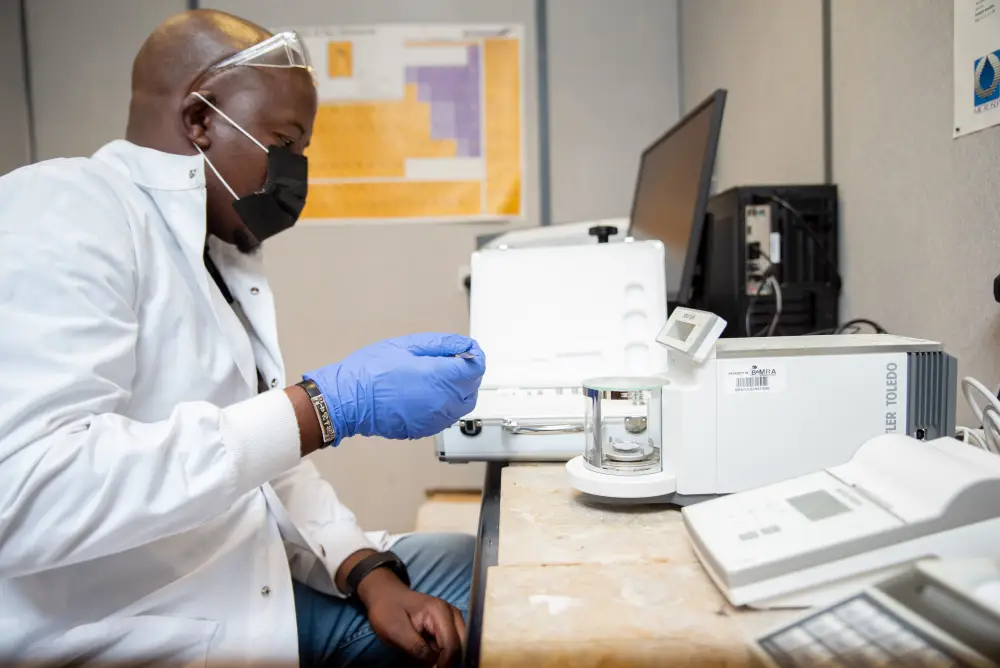
The BoMRA laboratory services are found under the Licensing and Enforcement department of BoMRA. The Laboratory is currently housed in Central Medical Stores facility in Gaborone West Industrial. The laboratory consists of the Physicochemical, Microbiology, and Medical devices sections.
The unit is responsible for the analysis of medicines and related substances as well as medical devices placed on the market to determine their fitness for purpose and verify manufacturer claims on their quality, efficacy, and safety. Timely testing and reporting of results as well as results validity are important outputs for a successful laboratory operation.
The laboratory achieves this through the implementation of a laboratory quality management system based on the principles of ISO 17025:2017 and the WHO prequalification guidelines and led by a laboratory manager supervising four analysts and one lab assistant in the physicochemical and medical devices sections of the laboratory.
The laboratory encompasses essentially two types of activity:
— compliance testing of finished pharmaceutical products employing “official” methods including pharmacopeial methods, validated analytical procedures provided by the manufacturer;
— testing of suspicious, counterfeit substances or products, submitted for examination by enforcement medicine inspectors, customs or police.
The laboratory performs its test based on Pharmacopeial prescribed methods which are the US Pharmacopeia, British pharmacopoeia, and The International Pharmacopeia.
Achievements
- Successfully implemented the USP Ghana Project.
- Achieved 72 % WHO GBT ML 3.
- 65 per cent of PMS 1st round samples have been tested.
- Successfully participated in Proficiency testing conducted by USP Ghana through AMQF Network.
Goal
- To achieve WHO Maturity level 3 by 31 March 2021
- To achieve ISO 17025 Accreditation readiness (75 %) by 31 March 2021
- % Level of readiness for accreditation (5 methods)
Challenges
- Long procurement processes and procedures
- Long delivery time for equipment (some equipment are made per order), consumables, and reagents
- Unavailability of maintenance and service providers locally
- Difficulty to get consultants and service providers on-site due to COVID-19 travel restrictions
Safety & Efficacy
Ensure the safety and efficacy of products to protect public and animal health.
ADRs & Vaccine Events
Monitoring adverse drug reactions and vaccine-related adverse events in humans.
Medical Devices
Surveillance of incidents related to medical devices to identify potential risks.
Cosmetics
Monitoring adverse effects of cosmetic products on the public.
Adverse Event Reporting
Collecting and analysing reports from healthcare professionals, manufacturers, and the public.
Risk Evaluation
Evaluating risks associated with medicines, vaccines, medical devices, cosmetics, and veterinary products.
Safety Measures
Implementing safety measures such as product recalls, label changes, or public warnings.
Stakeholder Awareness
Educating and engaging stakeholders on pharmacovigilance obligations and best practices.